Bomberman
miscellany
In-game artwork


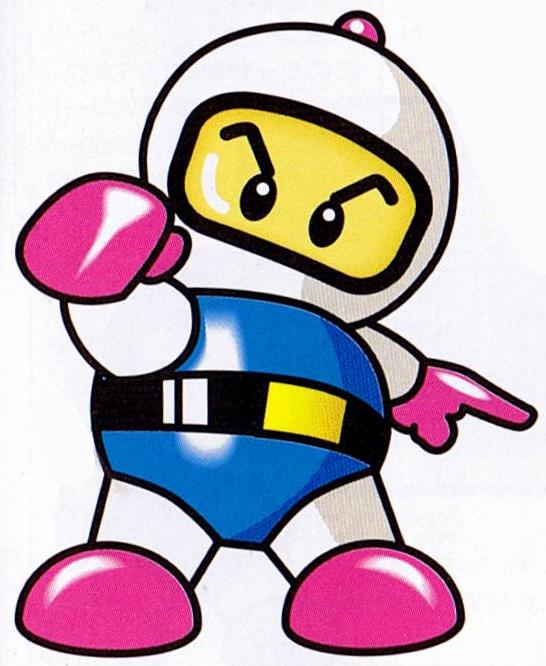
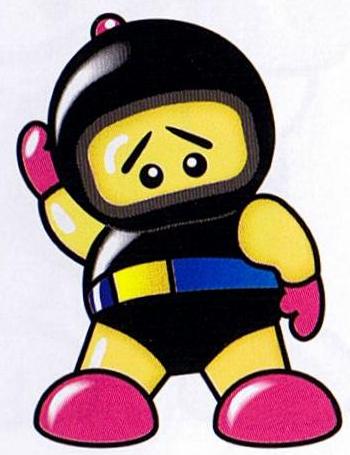
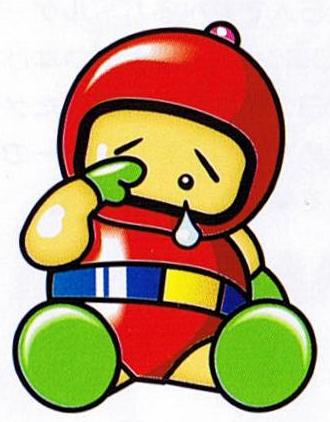
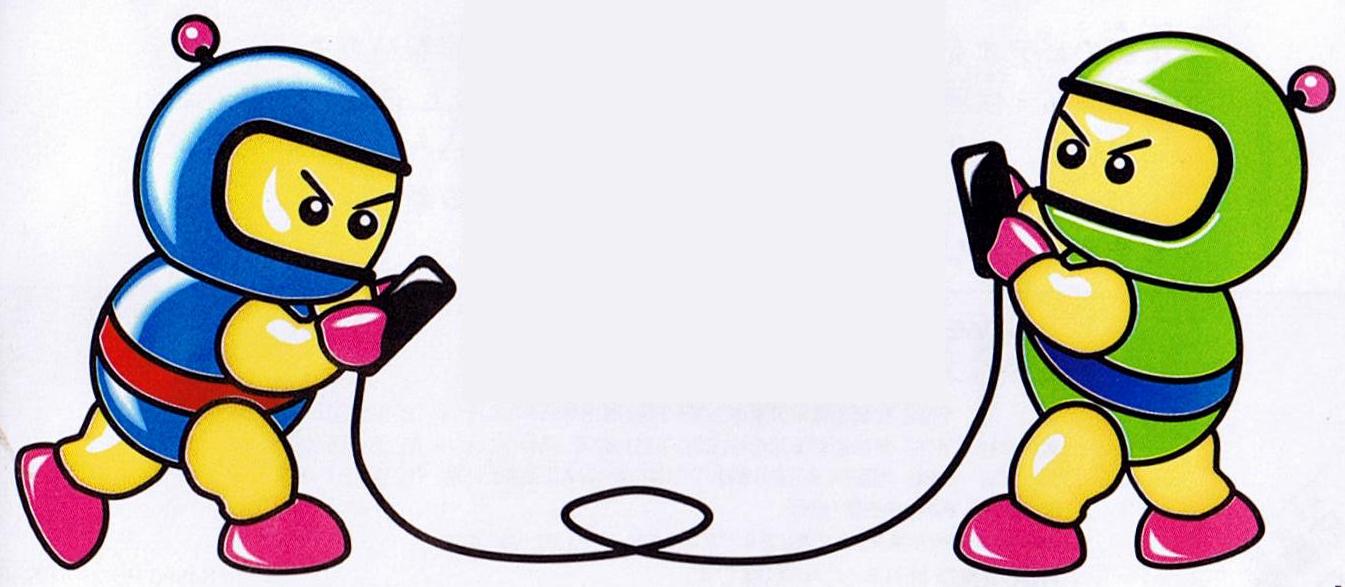
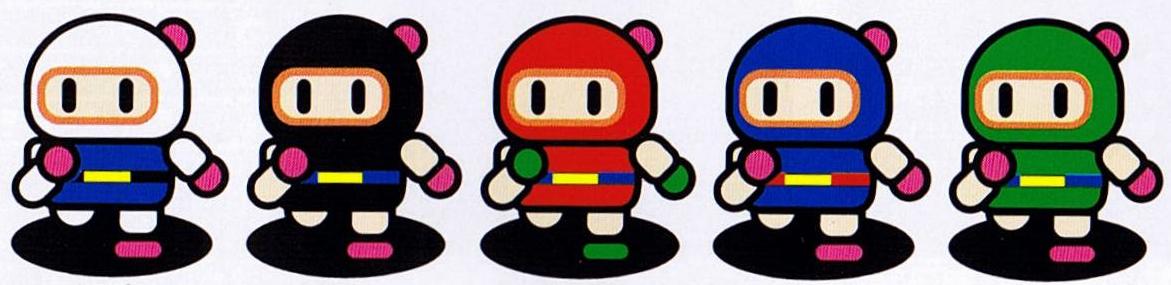
Manual artwork
Click to enlarge. Cropped from the Japanese manual, and edited (poorly) to remove overlapping text.



Music was recorded using the game's sound test in emulator Magic Engine.
size: 586kb / time: 0:20
size: 786kb / time: 0:27
size: 154kb / time: 0:05
size: 104kb / time: 0:03
size: 345kb / time: 0:12
size: 2.8mb / time: 1:39
size: 2.7mb / time: 1:31
size: 3.1mb / time: 1:43
size: 116kb / time: 0:04
size: 2mb / time: 1:06
size: 121kb / time: 0:04
size: 196kb / time: 0:06
size: 1.9,b / time: 1:11
size: 1.8mb / time: 1:02
size: 510kb / time: 0:17
size: 467kb / time: 0:17
size: 1.5mb / time: 0:53
size: 2.2mb / time: 1:13
size: 1mb / time: 0:31
size: 111kb / time: 0:04
size: 1.3mb / time: 0:45
size: 1.7mb / time: 0:59
size: 1.4mb / time: 0:48
size: 1.4mb / time: 0:50
size: 83kb / time: 0:03
American manual errors
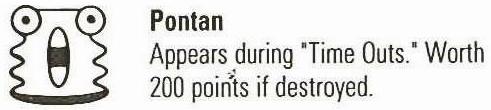
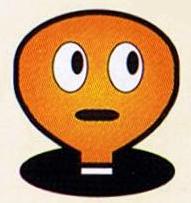
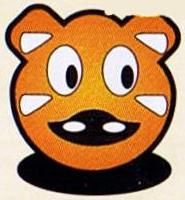
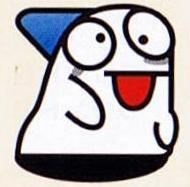
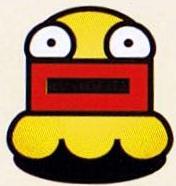
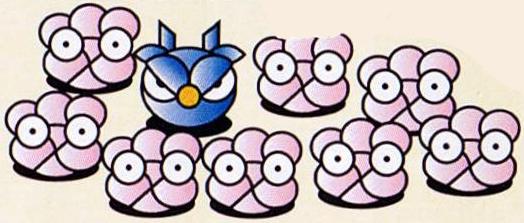
Page 7, "Enemy Characters & The Big Bosses", is host to some mildly amusing errors. The images for Shashakin and Nagacham are switched, as are Boyon's and Pontan's.
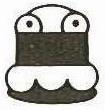
In addition, Telpio (Terupyo) has a solid black rectangle where his mouth is. I presume this is due to the strictly black-and-white printing, and not due to someone taking offence to the abstract octopus thing's lips.
Dynablaster for Commodore 64
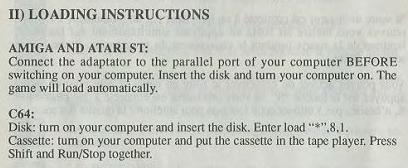
Alongside their MS-DOS, Amiga and Atari ST ports (see below), Ubi Soft had a Commodore 64 port planned alongside them, even going so far as printing instructions for it in the shared manual. The game never saw release, however, but was available for pre-order in German magazine Power Play [src], and was only ever previewed in German magazine Play Time (issue unknown). See Games That Weren't for more information.
● Sharp X68000
● MS-DOS
● Amiga
● Atari ST
● TurboDuo
● Bomberman Collection
As the first 16-bit Bomberman game for home consoles (and being licensed out to Ubi Soft for publishing in Europe), Bomberman saw a lot of action on various platforms!
Japanese - American
Japanese - American
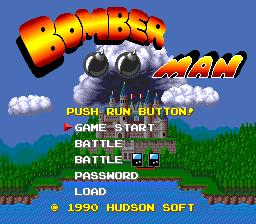
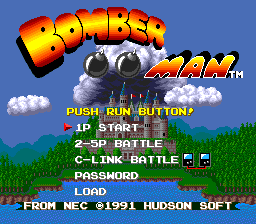
The American release renames most of the options, updates the copyright date, and adds a trademark to the logo.
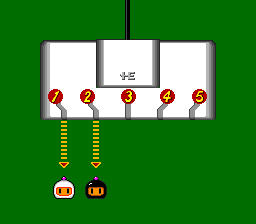
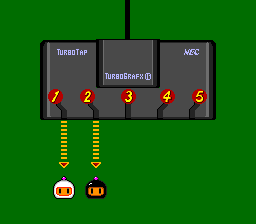
Japanese - American
The Multitap was recoloured for the American release to resemble the TurboTap, adding additional details to complete the resemblance.
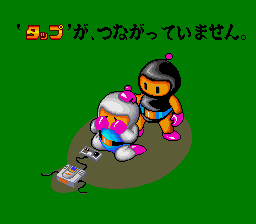
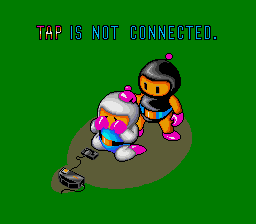
Japanese - American
Likewise, the console and controller were redrawn from a PC Engine to a TurboGrafx-16 on the "Multitap not connected" screen.
Pc Engine - Sharp X68000
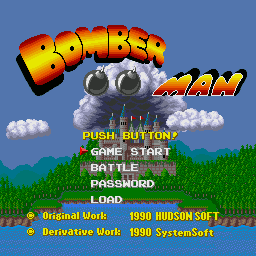
PC Engine - Sharp X68000
This port was developed by System Software. Its resolution is 256x256, so you have a greater vertical visibility than on the PC Engine (the PC Engine can display in 256x242, and I haven't a good excuse for why I don't take screenshots in that size).
It drops the GT-link option for obvious reasons, and adds its porting credit to the bottom.
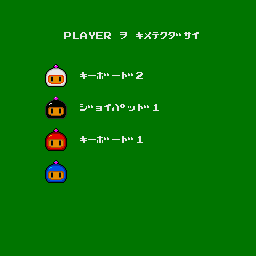
PC Engine - Sharp X68000
The multi-player is limited to 4 players. After selecting the number of players, each player must press a button on their input of choice - either a joypad or the keyboard (which can support two players - the left side uses ESDF to move, the right side uses arrow keys).
PC Engine - MS-DOS
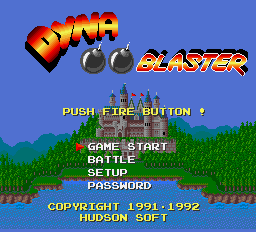
PC Engine - MS-DOS
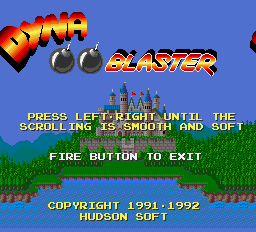
The screen resolution is 256x232, giving a slightly taller screen. There's a new logo, updated copyright, the clouds are missing, and the "LOAD" and GT-link options have been dropped, replaced with a new "SETUP" choice.
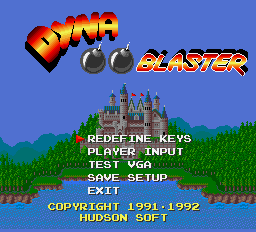
MS-DOS
The "setup" option allows you to configure the controls for player 1 and 2, allowing usage of both the keyboard and any compatible gamepads. "TEST VGA" will make the logo scroll back and forth so you can tweak the settings until it scrolls smoothly.
MS-DOS
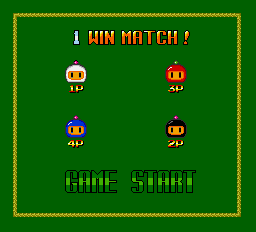
The Battle mode only allows up to 4 players (how the controls for players 3 and 4 are configured is beyond me), though the icon for player 5 still appears on the Battle HUD.
PC Engine - Amiga
PC Engine - Amiga
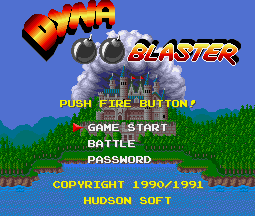
This port was developed by Actionomics. The game runs in a variable resolution - probably 320x240 with black borders, though I cropped the borders in a futile attempt at neatness.
The animated clouds are gone, the GT-link option is removed, as is the saving and loading function. Despite the date of 1991, the closest release date I can find for the game is "early April" of 1992, cited in Amiga Power issue 12.
Amiga
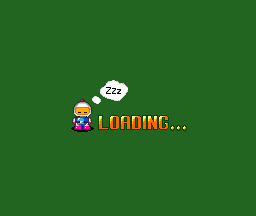
Since the game runs off a 3'5 inch floppy disc, there are loading times when a new mode or world is entered.
Amiga
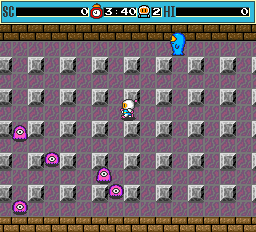
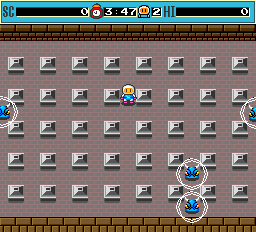
The battles against Warpman and Setsutore are modified for this version: Warpman doesn't warp, and rather than spawning enemies, the battle begins with around eight or ten of them on the field. You also fight three Warpmans rather than two.
Setsutore has lost its flame spray attack, and can do naught but wander aimlessly and periodically activate its force field.
Amiga
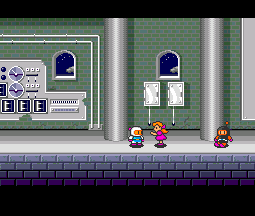
The final battle is also slightly different: There is no introductory march before the battle with Black Bomberman; the transforming Bombermen do not spray projectiles; and Black Bomberman has no attacks whatsoever, he simply walks and lets his shield periodically deactivate.
The ending stops after Lisa hugs Bomberman, with no scene of Black's castle crumbling. This also makes use of a sprite that the original game does not - see below.
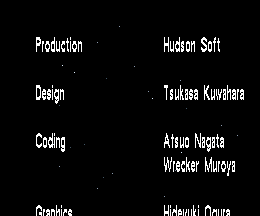
This version also has a brand new staff roll, set against a starfield and newly composed music, crediting the PC-Engine original staff, and the conversion staff at Actionomics.
PC Engine - Atari ST
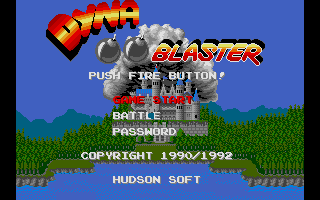
PC Engine - Atari ST
The game runs in 320x200, squashing the screen somewhat. The GT-link option is removed, as is the saving and loading function.
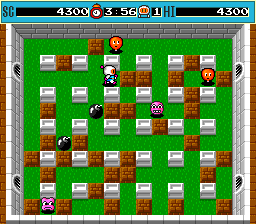
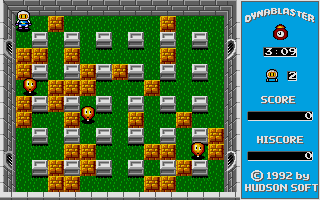
PC Engine - Atari ST
The HUD is displayed as a vertical sidebar, making the most of the space and meaning you have the exact same visiblity as you would on the PC Engine.
Bosses don't flash when they are hit, so there's no visual indicator that you are damaging them.
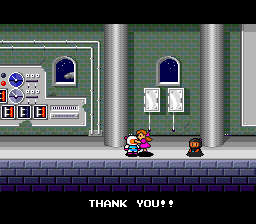
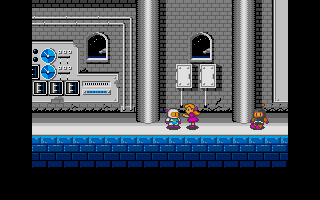
PC Engine - Atari ST
In addition to the omissions mentioned in the Amiga version, this version also truncates the intro cutscene (it fades out before Black Bomberman flies to his castle) and removes the staff roll entirely!
This version also uses newly composed music, replacing many of the original tracks for wholly new tunes.
TurboDuo
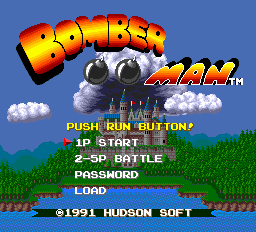
TurboGrafx-16 - TurboDuo
Bomberman is included as a secret game on the Gate of Thunder, Bonk's Adventure & Bonk's Revenge pack-in disc*.
Anyway! On the main menu, pressing Up, Right, Down, Left, Button II will play a sound before booting the game. The title screen has been updated and the TurboLink option removed. It otherwise appears to be identical to the original game.
Played through the launcher, the game is identical to the original version... but if you extract the ROM from the executable, the save and load functionality have been removed from the main menu and game over screens. Don't ask me how that works!
* Fandom wikis have made a dog's dinner of documenting this game properly, calling it all manner of monikers like the "4-in-1 Super CD" and using inaccurate "box art". It's just Gates of Thunder with a different disc and the two Bonk manuals stuffed inside! The case has no unique name or packaging; the "HCD2008T" serial on the disc is as close as it gets to a new title; and the TurboDuo packaging only refers to the multiple games included as "5 games inside," including Ys Book I & II and "A Secret Arcade Hit" TurboChip game. The Johnny Turbo comic just refers to it as "your 3 in 1 game disc".
Bomberman Collection Vol. 1
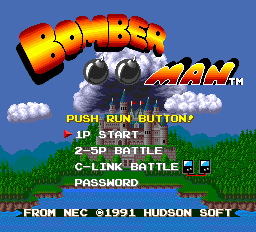
TurboGrafx-16 - Bomberman Collection
Unused graphics

Found among Black Bomberman's ending graphics of him skidding to a halt. These sprites actually see use in the Amiga and Atari ST versions to segue between his running and begging animations.
Also, a really pedantic observation, but all of Black's ending graphics have a palette slot for his belt buckle, but it's coloured the same colour as the rest of his belt. Yeah. Impress your friends with that knowledge, buddy.
Unused music
The sound test is home to several unused tracks, two of which wouldn't find a home until five years later!
Track 36 is the first boss theme from Super Bomberman 3!
Track 37 is the second boss theme from Super Bomberman 3!
Track 38 is an extended remix of the Bomberman NES title theme.